From Scrolling to Growing: How Waiting Time Became My Secret Learning Habit
Ever found yourself endlessly scrolling through apps while waiting for coffee, a ride, or your laundry to finish? I did too—until I realized those scattered minutes could actually add up to real growth. What if the time you thought was lost could finally feel meaningful? This is the quiet transformation that changed how I learn, one small moment at a time. It didn’t take a dramatic life change or extra hours in the day—just a shift in how I saw those in-between moments. And the best part? You can start today, right where you are, with the phone already in your hand.
The Hidden Minutes We All Waste
Let’s be honest—how many times have you looked up from your phone and realized you’ve just spent ten minutes watching random videos or tapping through social media feeds, with no real reason and zero satisfaction? I’ve been there more times than I can count. Standing in line at the grocery store, sitting in the carpool lane, waiting for the microwave to beep—these moments feel too short to do anything 'important,' so we default to scrolling. But when you add them up, they’re not short at all. In fact, researchers estimate that the average person spends over two hours a day on their phone, and a big chunk of that is made up of these little gaps in our routine.
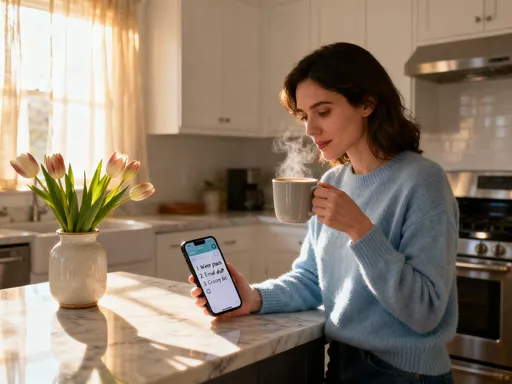
Think about your own day. That five minutes while the kids finish brushing their teeth. The ten minutes waiting for your doctor’s appointment. The eight minutes your dinner is baking in the oven. These aren’t just empty spaces—they’re tiny pockets of time that, if used differently, could become something powerful. I used to think, 'What can I really do in five minutes?' But then I started wondering, 'What if I could do something meaningful in every one of those moments?' That small shift in mindset changed everything. Instead of seeing these pauses as downtime, I began to see them as hidden opportunities—like finding spare change in the couch cushions, but for personal growth.
And here’s the truth: we don’t need big blocks of time to make progress. We just need consistency. The problem isn’t that we’re too busy. The problem is that we’ve been taught to overlook the small moments, believing they don’t matter. But what if they do? What if, over weeks and months, those forgotten minutes could actually help you learn a new skill, gain confidence, or finally understand something you’ve always wanted to?
The Myth of “Real Learning” Needs Hours
For years, I believed that real learning had to look a certain way. You needed a quiet room, a notebook, a full hour, and serious focus. If I didn’t have all those things, I told myself, 'I’ll do it later.' And 'later' never came. Sound familiar? That all-or-nothing mindset kept me stuck for a long time. I thought, 'If I can’t give it my full attention, why bother?' But the truth is, that mindset is one of the biggest barriers to learning in real life—especially for people like us, who are juggling family, work, and a million little things every single day.
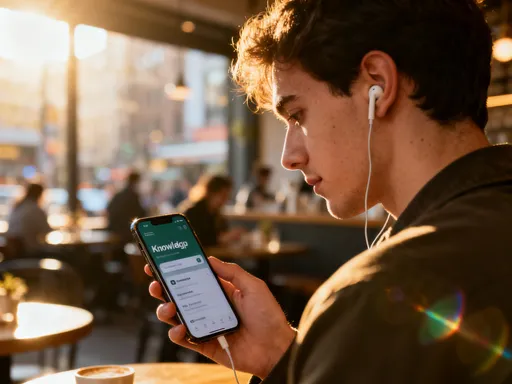
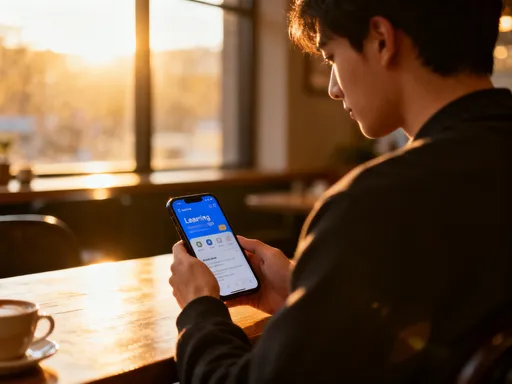
Here’s what changed: I discovered that modern learning tools aren’t designed for perfect conditions. They’re built for real life. Most online course platforms now offer bite-sized lessons—some as short as three or five minutes—that are easy to digest and designed to stick. I remember the first time I tried it. I was standing in line at my favorite coffee shop, phone in hand, about to scroll like usual. But instead, I opened a course app I’d downloaded weeks ago and never touched. I clicked on a short video about how to create a simple budget. It took less than seven minutes. I didn’t finish the whole course. I didn’t take notes. But when I walked away, I actually remembered the main idea: 'Track your spending for one week, and you’ll see where your money really goes.'
That tiny moment felt different. It wasn’t overwhelming. It didn’t require a big commitment. And yet, I walked away knowing something I didn’t know before. That’s when it hit me—learning doesn’t have to be heroic. It just has to happen. And if it can happen in a coffee line, it can happen anywhere. The idea that you need hours to learn something meaningful is a myth. In fact, short bursts of focused attention are often more effective than long, draining sessions. Our brains are wired to remember small, repeated inputs better than one big dump of information. So why keep waiting for the perfect time? The real secret is to start small, start now, and let those tiny lessons add up over time.
How Tiny Lessons Build Real Knowledge
You wouldn’t expect to save $1,000 by putting $100 in the bank once a year. But what if you saved $5 every week? Over time, it adds up. Learning works the same way. Each short lesson is like dropping a coin into a piggy bank. On its own, it doesn’t feel like much. But over weeks and months, those small deposits build into real knowledge. This is the power of consistency—and it’s backed by science. The brain learns best through spaced repetition, which means seeing information a little at a time, with breaks in between. That’s why cramming for a test never works as well as studying a little each day.
I started applying this idea to my own learning. While waiting for my son’s soccer practice to end, I’d listen to a short audio lesson on a new language. At first, I only learned simple phrases like 'Where is the bathroom?' or 'I would like water, please.' But after a few weeks, something surprising happened—I recognized those phrases when I heard them in a movie. I didn’t feel like I was 'studying,' but my brain was quietly making connections. Another time, I watched a two-minute video on meal planning during a subway delay. It taught me how to batch-cook proteins for the week. I tried it that Sunday, and it saved me so much time during busy weeknights. These weren’t big achievements on their own, but together, they started to change how I felt about myself. I wasn’t just passing time—I was growing.
The more I did this, the more I noticed a shift. I felt more capable. When I needed to understand a medical term during a doctor’s visit, I remembered a short lesson I’d watched months ago. When I was helping my daughter with her homework, I recalled a quick math refresher I’d done while waiting for the oven to preheat. These moments didn’t come from long study sessions. They came from tiny, repeated exposures—like watering a plant a little each day instead of drowning it once a month. And just like a plant, my knowledge started to grow steadily, quietly, without pressure. That’s the beauty of micro-learning: it doesn’t ask for perfection. It just asks for presence. And over time, presence turns into progress.
Choosing the Right Course for Micro-Moments
Not every online course is made for short, on-the-go learning. Some are designed for deep dives, with long videos, complex assignments, and heavy reading. Those have their place—but not in the five minutes you’re waiting for the dry cleaner. So how do you pick the right one for your micro-moments? I learned this the hard way. I signed up for a course once that looked great online, but the videos took forever to load, and each lesson was 25 minutes long. I never finished it. It just didn’t fit my life.
Now, I look for four simple things. First, mobile-friendly design. Can I open it easily on my phone? Does it work without Wi-Fi? Second, short modules. I prefer lessons under 10 minutes—something I can finish in one sitting, even if that sitting is on a park bench. Third, audio options. Sometimes I can’t play sound, but I can listen with earbuds. Other times, I need silent videos with captions. Flexibility matters. And fourth, clear progress tracking. I want to see my little wins—like a progress bar that fills up as I go. It’s motivating to know I’m moving forward, even if it’s just one small step.
I tested a few different apps before finding one that worked. One had beautiful graphics but was slow and complicated. Another had great content but no offline access. The one I stuck with was simple, fast, and intuitive. It didn’t try to impress me with fancy features. It just made learning easy. And that’s what matters. You don’t need the most advanced app. You need the one that fits your life. Think of it like choosing a pair of shoes. You wouldn’t pick high heels for a long walk. You’d pick something comfortable, supportive, and ready for real terrain. The same goes for learning tools. Pick the one that supports your journey, not the one that looks good in an ad.
Building the Habit Without the Pressure
Habits aren’t built on willpower. They’re built on design. I used to think I needed more discipline to learn consistently. But the truth is, I just needed better systems. The biggest shift came when I stopped relying on motivation and started making it easier to succeed. One simple trick? I linked my learning to something I already do every day. For example, every time I sit down on the bus or train, I open my course app. It’s not a big decision—I don’t have to ask myself, 'Should I learn something now?' It just happens, like putting on my seatbelt.
Another game-changer was turning off notifications from social media apps during certain times. I didn’t delete them—I just silenced the noise. That way, when I pulled out my phone, I wasn’t immediately pulled into scrolling mode. I also created a 'learning playlist'—a short, calming song that I play only when I’m about to start a lesson. It signals to my brain, 'It’s time to focus.' Sounds small? Maybe. But these little cues make a big difference. They turn learning from a chore into a ritual.
One of my favorite changes was renaming the app icon. Instead of the formal course name, I changed it to 'Grow.' Now, when I see that little green leaf on my screen, it reminds me why I’m opening it. It’s not just another app. It’s a promise to myself. And because it’s so easy to access and feels meaningful, I actually use it. The key is to remove friction. If it feels hard, you won’t do it. But if it feels natural, it becomes part of your rhythm. You don’t have to be perfect. You just have to make it simple.
When Life Gets in the Way—And How to Keep Going
Let’s be real—some days, everything falls apart. The kids are sick. The car breaks down. You’re exhausted and just want to collapse on the couch. I’ve had those days too. And on those days, the idea of learning something new feels impossible. But here’s what I’ve learned: progress isn’t about perfection. It’s about showing up, even a little. That’s why I adopted the 'one-module rule.' On busy days, I don’t aim to finish a course or even a full lesson. I just commit to one short module—three minutes, five minutes, whatever I can manage.
Some days, that’s all I do. And you know what? It’s enough. Because even one module keeps the habit alive. It reminds me that I’m still moving forward, even if it’s slow. I remember one day when I forgot my earbuds at home. I was at the laundromat, 20 minutes to kill, and I thought, 'Well, I can’t listen to anything.' But then I realized—many lessons have captions. So I watched a silent video about stress management while folding laundry. I still absorbed the content. I still learned something. That moment taught me that flexibility beats rigidity every time. You don’t need perfect conditions. You just need the willingness to adapt.
And when I miss a day? I don’t beat myself up. I just start again the next day. No guilt. No drama. Because learning isn’t a race. It’s a journey. And every time you come back, you’re proving that you care about your growth. That’s what really matters.
The Ripple Effect of Small Learning Wins
Here’s the unexpected part: learning in tiny bursts doesn’t just teach you new things. It changes how you see yourself. I used to think, 'I’m too busy to learn.' Now I think, 'I’m the kind of person who learns, even in small moments.' That shift in identity is powerful. It spills over into other areas of life. I make better decisions about food because I watched a few lessons on nutrition. I feel more confident managing money because I learned budgeting basics in five-minute chunks. I even started a small side project—something I never thought I had time for—because I realized I could learn the skills as I went.
These changes didn’t happen overnight. They grew quietly, like a garden tended one small step at a time. And the more I learned, the more I wanted to learn. It became a positive cycle. Knowledge builds confidence. Confidence builds curiosity. Curiosity leads to more learning. It’s not about becoming an expert or earning a certificate. It’s about feeling more in control of your life. It’s about knowing that you can grow, adapt, and improve—no matter how full your schedule is.
Today, when I’m waiting for my coffee, I don’t reach for social media. I open my course app. That small choice has added up to real change. I’ve learned about cooking, finance, mindfulness, and more—all in the moments I used to waste. And the best part? Anyone can do this. You don’t need more time. You don’t need special skills. You just need to see those hidden minutes for what they really are: tiny gifts of growth, waiting to be opened. So the next time you’re standing in line, sitting in traffic, or waiting for the laundry to finish, ask yourself: what could I learn in the next five minutes? The answer might just change your life—one small moment at a time.