I’ll remember it later — and other lies I stopped telling myself thanks to one app
You know that moment when you promise yourself, "I’ll remember this later" — only to completely forget by dinner? I’ve been there, too. Juggling work, family, and personal goals often left me overwhelmed and embarrassed. I’d walk into a room and blank on why I was there. I’d nod along in a meeting, certain I’d recall the action items, only to panic later when they slipped through the cracks. My brain felt like an overstuffed drawer — everything important jammed in, but nothing easy to find. That constant mental juggling didn’t just make me inefficient; it made me feel like I was failing. But everything changed when I started using a simple task management app — not just as a tool, but as a true extension of my mind. It didn’t just organize my to-dos; it brought calm, clarity, and confidence back into my daily life. And honestly, it gave me back a part of myself I didn’t realize I’d lost.
The Breaking Point: When My Memory Failed Me (Again)
It was a Tuesday — not even a particularly busy one by my standards — when the whole house of cards collapsed. I had promised my daughter I’d sign her field trip permission slip that morning. I saw it on the kitchen counter. I even picked it up, thought, "I’ll do it after I check my email," and set it back down. By the time I remembered, it was 8:30 p.m., the form was still unsigned, and she was in tears. That was the third time that month I’d dropped the ball on something important. A week earlier, I’d missed a work deadline because I’d “mentally noted” to follow up, and two days before that, I showed up to book club without the book — again. I wasn’t lazy. I wasn’t careless. I was just… full. My mind was a browser with 47 tabs open, and I couldn’t keep track of which one mattered most.
The guilt was crushing. I started questioning myself — not just my memory, but my reliability. Was I becoming someone who couldn’t be counted on? Was I failing my family? My job? Myself? I tried everything: sticky notes everywhere, scribbled lists on napkins, voice memos while driving. But they all ended up scattered, ignored, or forgotten. The harder I tried to remember everything, the more I felt like I was drowning. That night, after tucking my daughter in and apologizing for the tenth time, I sat at the kitchen table and cried. Not because of the permission slip, but because I was tired — tired of feeling scattered, tired of letting people down, tired of being my own worst enemy. That was the moment I realized: my brain wasn’t built to hold all of this. And expecting it to was not only unrealistic — it was unfair.
Meeting the App That Felt Like a Friend, Not a Robot
I wasn’t looking for a miracle. I just wanted something that wouldn’t make me feel worse. I’d tried productivity apps before — sleek, feature-packed tools that made me feel like I needed a degree in tech to use them. They were full of bells and whistles: calendar syncs, priority matrices, progress charts. But they also came with pressure. They made me feel like if I wasn’t using every function perfectly, I was failing. I needed something different — something that felt less like a boss and more like a helper. That’s when I found the app that changed everything. It wasn’t the most powerful, and it definitely wasn’t the fanciest. But it felt… kind. The interface was clean, almost gentle. No flashing alerts, no judgmental red dots. Just a quiet space where I could dump my thoughts without fear.
What surprised me most was how it made me feel safe. When I added a task, it didn’t demand perfection. I could write “call dentist??” or “buy birthday gift for Mom (urgent??)” and it didn’t scold me for being vague. It just held the thought. And when it sent a reminder, it wasn’t a harsh beep — it was a soft chime, like a friend gently tapping my shoulder. I started looking forward to opening it. That’s when I realized: tools don’t have to be intimidating to be effective. In fact, the best ones are the ones that disappear into your life, not dominate it. This app didn’t make me feel like I had to earn my way into organization. It met me where I was — messy, forgetful, overwhelmed — and said, "That’s okay. Let’s figure this out together."
From Overwhelmed to Organized: The First Week That Changed Everything
I didn’t start big. My first goal wasn’t to master time management or become a productivity queen. I just wanted to stop forgetting the small stuff. So on Monday morning, I opened the app and typed: "Buy milk." That was it. One task. But something shifted the moment I hit save. For the first time in years, I didn’t have to keep "milk" in my head. It was out, it was recorded, it was safe. Later that day, I added "pack lunches" and "pay electric bill." By Tuesday, I was writing down things I’d normally just "remember": "email school about pickup change," "find pediatrician number." Each entry felt like a tiny exhale.
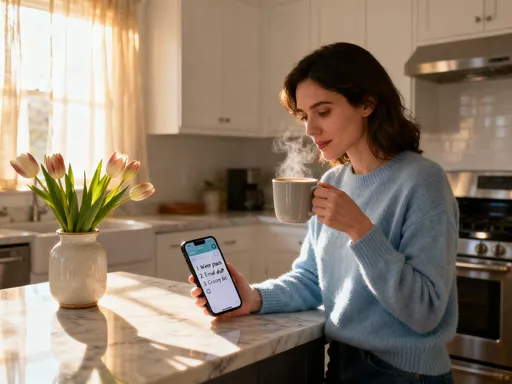
By Wednesday, I started grouping things — not in any fancy system, just simple lists: "Home," "Work," "Personal." Seeing them all in one place was shockingly calming. No more mental scavenger hunts. No more panic when I couldn’t recall if I’d done something. Thursday morning, I woke up and checked the app before getting out of bed. There it was: "Take vitamins," "review agenda for 10 a.m. meeting," "call plumber." I did them one by one, and for the first time in memory, I ended the day with everything crossed off. Not because I’d done more — but because I’d forgotten less. Friday night, I looked back at the week. I hadn’t transformed my life. But I had transformed my peace of mind. I slept better. I argued less with my partner. I felt… lighter. That week taught me a powerful lesson: organization isn’t about control. It’s about care. And the first person we need to care for is ourselves.
Rethinking How I Express Myself — and My Priorities
Here’s something I never expected: using a task app helped me understand myself better. For years, I’d tell myself things like "I should exercise more" or "I need to be more present." But those thoughts were vague, guilt-inducing, and impossible to act on. The app forced me to get specific. Instead of "do more yoga," I wrote "10-minute morning stretch on mat." Instead of "spend time with kids," I wrote "read bedtime story to Lily, no phone." Suddenly, my intentions had shape. They weren’t just wishes — they were plans.
And that changed everything. When I wrote "call Mom and really listen, not just chat," I wasn’t just scheduling a call — I was honoring a relationship. When I added "write down 3 things I’m grateful for" to my nightly routine, I was building a habit of mindfulness. The app became a space where I could define what mattered — not what the world expected, but what *I* valued. I started treating my task list like a love letter to my future self. Each item was a promise: "I see you. I know you’re tired. But I also know you’re capable. Let me help you show up for your life." That shift — from obligation to intention — was revolutionary. I wasn’t just managing tasks. I was practicing self-respect.
Family Harmony Through Shared Clarity
I’ll admit, I was nervous about bringing the app into family life. I didn’t want to turn into "the scheduler," ruling the household with rigid lists and color-coded calendars. But when I introduced it as a tool for *us* — not just for me — everything changed. We created shared lists: "Groceries," "Chores," "Kids’ Activities." I showed my husband how to add things when he remembered them — no more "I told you that last week!" fights. We gave our daughter a simple checklist for her morning routine: "brush teeth," "pack backpack," "eat breakfast." She loved checking things off.
The real test came during the back-to-school rush. Mornings used to be chaos — missing shoes, forgotten lunches, last-minute permission slips. But that year, we had a shared "School Mornings" checklist in the app. The night before, we’d review it together. In the morning, everyone could glance at their phone or the tablet on the fridge and know exactly what to do. No yelling. No panic. Just quiet efficiency. One morning, as we walked out the door — shoes on, lunches packed, permission slips signed — my husband turned to me and said, "This feels… easy." That moment was everything. The app didn’t make us more robotic. It made us more present. We weren’t spending our mornings managing stress — we were starting our day together, calm and connected. And that, more than any perfectly packed lunch, was the real win.
Building a Smarter, Kinder Version of Myself
After a few months of consistent use, I started to notice changes that went far beyond remembering appointments. I became more aware of how I spent my time. I could see patterns: I always said "yes" to things on Mondays, even when I was swamped. I tended to put off creative projects until they felt urgent. The app didn’t judge — it just showed me the truth. And with that awareness came power. I started setting boundaries. I began scheduling time for things I loved — painting, journaling, long walks — not as afterthoughts, but as non-negotiables. I even started saying "no" without guilt.
But the biggest change was in how I saw myself. Every time I completed a task — big or small — I built a little more trust in my own word. I had spent years breaking promises to myself: "I’ll start tomorrow," "I’ll do it later," "I’ll remember." Now, when I said I’d do something, I followed through. That consistency didn’t make me perfect — but it made me reliable. And that reliability bred confidence. I wasn’t just managing tasks; I was building a relationship with myself — one based on honesty, care, and follow-through. The app wasn’t creating this new version of me. It was simply giving me the space and support to become who I already was, underneath all the chaos.
A Life That Feels Lighter — and More Fully Lived
Today, my task app is more than a digital to-do list. It’s a quiet companion in my daily life — the place where I dump my worries, plan my joys, and honor my commitments. It doesn’t make me do more. It helps me do what matters — with less stress and more intention. I’ve stopped telling myself "I’ll remember." Instead, I say, "I’ll write it down." And in that small shift, I’ve gained so much: peace of mind, stronger relationships, and a deeper sense of self-trust.
What I’ve learned is that the best technology isn’t the one with the most features — it’s the one that helps you live better. It’s not about chasing efficiency for efficiency’s sake. It’s about creating space — space to breathe, to connect, to grow. When we stop using our brains as storage units, we free them up for what they’re truly meant for: thinking, feeling, creating, loving. The app didn’t change my life by adding more to it. It changed my life by taking the weight off. And in that lightness, I’ve found joy I didn’t know I’d lost. So if you’re still trying to remember it all — I get it. But maybe, just maybe, it’s time to let go. Write it down. Trust the system. And rediscover what it feels like to live — not just survive, but truly live.