How Yoga and TCM Quietly Transformed My Health—And What Actually Changed
I never thought tiny shifts in my daily routine could make such a difference—until I tried combining yoga meditation with traditional Chinese medicine (TCM) wellness habits. As a total beginner, I was skeptical. But over weeks, I noticed real shifts: better sleep, steady energy, less tension. This isn’t about quick fixes. It’s about tuning into subtle health indicators your body whispers before it screams. Here’s what I learned, tested, and still practice today—simple, science-aligned, and surprisingly powerful.
The Wake-Up Call: When My Body Started Sending Signals
For years, I mistook exhaustion for normalcy. Mornings began with a struggle—eyes heavy, mind foggy, body stiff—as if I hadn’t slept at all. I relied on coffee to push through the early hours, only to crash by mid-afternoon. My energy came in waves, unpredictable and unreliable. Some days, I felt capable and sharp; others, even simple tasks like folding laundry or preparing dinner felt overwhelming. At first, I blamed it on a busy life. After all, wasn’t fatigue just part of being a working mother, a partner, a responsible adult?
But then other signs appeared. My sleep, once deep and restful, turned restless. I’d wake multiple times, often around 2 or 3 a.m., unable to return to sleep. Digestion became inconsistent—bloating after meals, occasional discomfort that I brushed off as stress-related. My mood fluctuated more than usual. Small frustrations would spark disproportionate reactions. I wasn’t unwell in a diagnosable way, but I wasn’t thriving either. The discomfort was subtle, like a whisper beneath the noise of daily life. It wasn’t until a routine check-up revealed slightly elevated cortisol levels that I realized: my body had been sending signals for years. I had simply stopped listening.
What I now understand is that these symptoms—poor sleep, energy dips, digestive irregularities, emotional reactivity—are not isolated issues. They are interconnected signs of imbalance. Modern medicine often treats them as separate complaints, prescribing solutions for each without addressing the underlying rhythm. But in holistic health models, including traditional Chinese medicine and mind-body practices like yoga, these are seen as early warnings. They indicate that the body’s internal environment—its nervous system, hormonal balance, and energy flow—is out of sync. Ignoring them is like ignoring the blinking check-engine light in your car. Eventually, the system will demand attention.
This realization was my wake-up call. I didn’t need a crisis to make a change. I needed awareness. And with that awareness came a shift in mindset: instead of pushing through fatigue or medicating symptoms, I began asking a different question—what is my body trying to tell me? That simple shift opened the door to a new approach: one rooted in observation, prevention, and gentle restoration.
Discovering the Blend: Why I Tried Yoga and TCM Together
My search for answers led me down many paths—nutrition blogs, sleep trackers, stress management apps—but what resonated most were two ancient systems: yoga and traditional Chinese medicine. At first glance, they seemed worlds apart. Yoga, with its emphasis on breath and movement, felt accessible, physical. TCM, with its talk of meridians and qi, sounded mysterious, almost abstract. But the more I learned, the more I saw their shared philosophy: both view health as a state of balance, not the absence of disease. Both prioritize prevention. And both rely on self-awareness as the foundation of wellness.
Yoga, in its truest form, is not just a fitness routine. It’s a practice of nervous system regulation. The slow stretches, the controlled breathing, the focus on present-moment awareness—all of these are designed to shift the body from a state of stress (sympathetic dominance) to one of rest and repair (parasympathetic activation). What drew me in was the simplicity of the mechanism: by changing my breath, I could change my state. That was empowering. I didn’t need a prescription or a diagnosis. I could influence my own physiology with intention and practice.
TCM, on the other hand, offered a different kind of lens. Instead of focusing on isolated symptoms, it looks at patterns. Fatigue isn’t just low energy—it might be a sign of spleen qi deficiency. Restless sleep could reflect liver qi stagnation. The language was unfamiliar, but the concept made sense: the body operates in rhythms, influenced by time of day, season, diet, and emotion. When these rhythms are disrupted, imbalance follows. TCM doesn’t aim to suppress symptoms but to restore harmony by aligning with natural cycles—like eating warm, cooked foods in winter or rising with the sun in summer.
The reason I decided to combine both was synergy. Yoga gave me tools to calm my nervous system in the moment. TCM gave me a framework to understand my body’s long-term patterns. Together, they created a feedback loop: the more I practiced yoga, the more attuned I became to subtle shifts in my energy and mood—shifts that TCM helped me interpret. It wasn’t about adopting a rigid protocol. It was about cultivating a relationship with my body, one based on listening rather than overriding.
First Moves: My Beginner-Friendly Yoga Routine (And Why It Worked)
I started small—just ten minutes a day. That was the only rule: consistency over intensity. My routine wasn’t complex. I began with gentle stretches: cat-cow to warm the spine, child’s pose to release tension in the back and hips, and seated forward fold to calm the nervous system. Each movement was slow, intentional, paired with deep breathing. I didn’t push into discomfort. I focused on sensation, not form. The goal wasn’t flexibility or strength, but presence.
The breathwork was the anchor. I practiced diaphragmatic breathing—inhaling deeply through the nose, letting the belly expand, then exhaling slowly through the mouth. At first, it felt awkward. My mind wandered. But within a week, I noticed a shift. That mid-afternoon slump? It softened. The racing thoughts before bed? They quieted. Research supports this: slow, rhythmic breathing stimulates the vagus nerve, which signals the brain to reduce stress hormones like cortisol. It’s a direct line to the parasympathetic nervous system. I wasn’t just relaxing—I was retraining my body’s stress response.
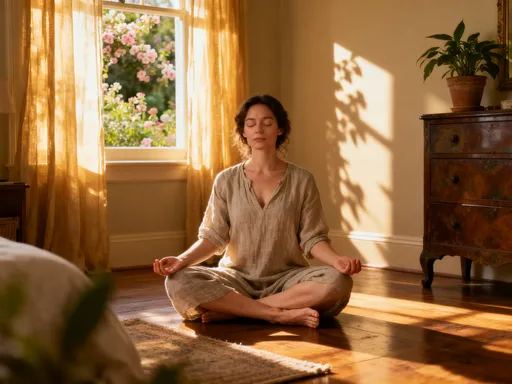
After movement and breath, I added a short seated meditation. I sat comfortably, spine upright, hands resting on my knees. I focused on the breath, gently bringing my attention back whenever it drifted. Some days, my mind was busy. Other days, it settled quickly. The practice wasn’t about achieving stillness but about showing up. Over time, this daily ritual became non-negotiable, like brushing my teeth. It wasn’t a luxury. It was maintenance.
What made this routine work was its accessibility. I didn’t need a mat, special clothes, or a quiet house. I could do it in the living room while the kettle boiled or before the family woke up. There was no pressure to perform. The emphasis was on consistency, not perfection. And that made all the difference. Small efforts, repeated daily, built resilience. I wasn’t fixing anything—I was supporting my body’s natural capacity to self-regulate.
TCM Wisdom I Actually Use: Daily Habits Beyond Herbs
When I first explored TCM, I assumed it was about herbal formulas and acupuncture. But what I found most useful were the everyday habits—simple, non-invasive practices that required no special training. The first was drinking warm water in the morning. Instead of reaching for coffee, I started my day with a cup of warm water, sometimes with a slice of lemon. In TCM, this is believed to support spleen function and aid digestion. I noticed that my stomach felt less sluggish, my bowels more regular. Whether it was the warmth or the ritual, the effect was real.
Another shift was aligning my meals with the sun. TCM teaches that the body’s digestive fire is strongest in the morning and early afternoon. So I began eating my largest meal at lunch, a moderate one at breakfast, and a light dinner by 7 p.m. No heavy proteins or raw salads at night. At first, it felt restrictive. But within weeks, my digestion improved. Bloating decreased. I slept better. Modern science echoes this: late eating disrupts circadian rhythms and slows metabolism. But TCM framed it differently—not as a rule to follow, but as a way to honor the body’s natural rhythm.
I also started paying attention to subtle signs. The coating on my tongue, for instance. A thick white coating often appeared when I ate too many cold or raw foods. Energy dips in the late afternoon coincided with times when certain organ systems, like the spleen, are traditionally most active. These weren’t diagnoses—just observations. Over time, I learned to adjust. If my tongue looked heavy, I’d eat warm, cooked grains. If I felt drained at 3 p.m., I’d take a short walk or do a few breathing exercises instead of reaching for sugar.
These habits weren’t about achieving perfection. They were about creating small points of alignment. Each one was a signal to my body: I’m paying attention. And that awareness became its own form of healing.
Tracking What Matters: The 5 Health Indicators I Monitor Now
One of the most powerful changes was learning what to track. I stopped chasing numbers on a scale or obsessing over step counts. Instead, I focused on five observable indicators that reflect overall balance: sleep depth, digestion ease, energy stability, emotional balance, and recovery speed. These aren’t measured with devices but noticed through daily reflection.
Sleep depth is the first. Do I fall asleep easily? Do I wake refreshed? Restless sleep or frequent waking often signals stress or liver qi stagnation in TCM. Digestion ease—how I feel after meals—tells me about my spleen and stomach function. Bloating, gas, or discomfort are clues that something is off, whether it’s food choice or timing. Energy stability refers to the evenness of my vitality throughout the day. Crashes or spikes suggest blood sugar swings or adrenal fatigue. Emotional balance—how I respond to stress—reveals nervous system health. Am I reactive or resilient? Finally, recovery speed: how quickly do I bounce back after a busy day or a poor night’s sleep? Slow recovery indicates depleted reserves.
Each morning, I ask myself: how did I sleep? How is my digestion? How is my energy? These aren’t judgmental questions. They’re check-ins. If sleep was poor, I might add an extra five minutes of breathwork at night. If digestion is sluggish, I’ll eat warmer, easier-to-digest foods. If energy is low, I’ll prioritize rest. The goal isn’t to fix but to respond. This kind of tracking fosters a proactive relationship with health—one where I’m not waiting for symptoms to worsen before acting.
What surprised me is how interconnected these indicators are. Better sleep improves digestion. Stable energy supports emotional balance. When one area improves, others often follow. It’s not about optimizing each in isolation but about nurturing the whole system. And that’s where both yoga and TCM shine—they support all five by promoting regulation, rhythm, and resilience.
Science Meets Tradition: What Research Says About These Practices
I understand skepticism. Terms like qi or meridians aren’t found in anatomy textbooks. But when I looked into the research, I found that many of the benefits attributed to yoga and TCM align with measurable physiological changes. For example, studies show that regular yoga practice reduces cortisol levels, lowers blood pressure, and improves heart rate variability—a marker of nervous system flexibility. Mindfulness meditation, a core component of yoga, has been linked to reduced inflammation and improved immune function.
Breathwork, particularly slow diaphragmatic breathing, activates the parasympathetic nervous system, promoting relaxation and digestion. This is not metaphor—it’s physiology. Similarly, the TCM concept of eating with the sun aligns with circadian biology. Our digestive enzymes, gut motility, and insulin sensitivity follow a daily rhythm, peaking during daylight hours. Eating late disrupts this, increasing the risk of metabolic issues. While TCM describes this in terms of stomach and spleen qi, science describes it in terms of circadian clocks in the liver and pancreas. The language differs, but the observation is similar.
Even the practice of tongue observation has parallels. While not a diagnostic tool in Western medicine, changes in tongue coating can reflect hydration, oral microbiome health, or digestive function. Dryness, color, and texture offer clues that, when combined with other symptoms, can inform self-care choices. The key is not to overinterpret but to use these signs as part of a broader awareness.
None of this proves that TCM’s theoretical framework is scientifically validated in every aspect. But it shows that many of its practical recommendations—rhythm, moderation, mindful eating, rest—support health in ways that research confirms. The blend of tradition and science isn’t about replacing one with the other. It’s about using both to deepen understanding and guide choices.
Building a Sustainable Practice: How to Start Without Overwhelm
The biggest mistake I made early on was trying to do too much. I attempted hour-long yoga sessions, strict TCM diets, and daily tongue photos. Within a week, I burned out. Sustainability doesn’t come from intensity. It comes from integration. The most effective approach was to start with one small habit and anchor it to an existing routine.
For me, it was morning breathwork. I linked it to making my tea. While the water heated, I stood by the counter and practiced five rounds of deep belly breathing. That tiny ritual became automatic. After a month, I added a two-minute seated meditation. Six months in, I began adjusting my meal timing. Each step was small, each built on the last. The key was patience. Benefits didn’t arrive overnight. They accumulated—like interest on a savings account for health.
I also learned to let go of comparison. Social media is full of perfect yoga poses and flawless wellness routines. But real practice is messy. Some days, I skip my routine. Some days, I eat late or feel irritable. That’s not failure. It’s humanity. The practice isn’t about being perfect. It’s about returning—again and again—to awareness.
For anyone starting out, my advice is simple: pick one thing. One five-minute habit. Link it to something you already do. Notice what shifts. Let that curiosity guide the next step. Wellness isn’t a destination. It’s a daily conversation with your body. And the more you listen, the clearer the answers become.
Conclusion: Listening Is the First Step to Healing
Looking back, the most profound change wasn’t in my sleep or digestion or energy—though those improved. It was in my relationship with my body. I stopped seeing it as a machine to push, fix, or control. I began to see it as a wise companion, always communicating. Yoga and TCM didn’t transform me through dramatic interventions. They taught me to listen.
True wellness isn’t about chasing an ideal. It’s about noticing the present. It’s in the warmth of morning water, the rhythm of a slow breath, the quiet moment before the day begins. These practices don’t promise miracles. But they offer something more lasting: a return to attunement. And when you finally hear what your body has been saying all along, everything changes—not because you fixed yourself, but because you finally started paying attention.